Wrecker Island sligger extermination
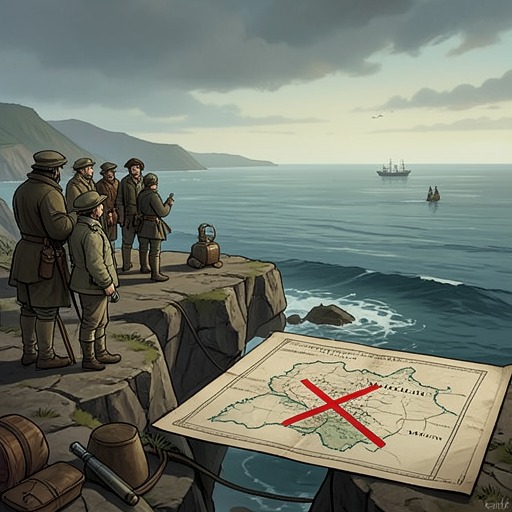
Secret InvasionThe Wrecker Island sligger extermination was the costly operation that ended the immediate threat to Sweetboro by destroying the creatures and their eggs on the island where they had originated. Led by Sheriff Mason Parker with assistance from Captain Josh Moody and fourteen state troopers, the mission also exposed the danger of the contamination associated with the island’s Nazi submarine wreck: eliminating the animals was not enough unless their remains and the leaked material were dealt with as well.
Background and Stakes
The island mission followed an earlier failure of trust. The previous year, a sheriff had called for help, but Josh believed that call was a hoax. When the threat required action again, he felt obligated to make amends and brought fourteen troopers from the South Carolina State Patrol to assist Mason. The operation therefore carried both immediate stakes—the safety of Sweetboro—and the weight of Josh’s earlier disbelief.
The Sliggers were described as the likely evolutionary result of generations of sea animals consuming waste from experiments associated with the wreck. The account does not establish the exact substance or precisely how the creatures developed. Denise Baddington’s later analysis of their tissue yielded no conclusive identification, and she was still awaiting results from residue samples taken from the Wrecker Island Nazi U-boat. She suspected that German and Japanese scientists had created a substance capable of inducing genetic mutation when introduced into an organism’s DNA. In her theory, generations of Sliggers had acquired traits from the marine species they ate. This remained an explanation under investigation, not a confirmed laboratory result.
The creatures’ appearance made the biological threat concrete. They stood about five feet tall, with olive-green skin, long reptilian tails, thick amphibious legs, webbed feet, and three pairs of four-foot tentacles tipped with venomous claws. Their heads were roughly the size of a man’s, with protruding snouts, lower jaws extending beyond the upper, needle-like teeth, and large, bulging black eyes. The description underscores why the mission was not simply a cleanup of an obscure environmental hazard: the leak had become a living, lethal danger.
The Extermination and Its Cost
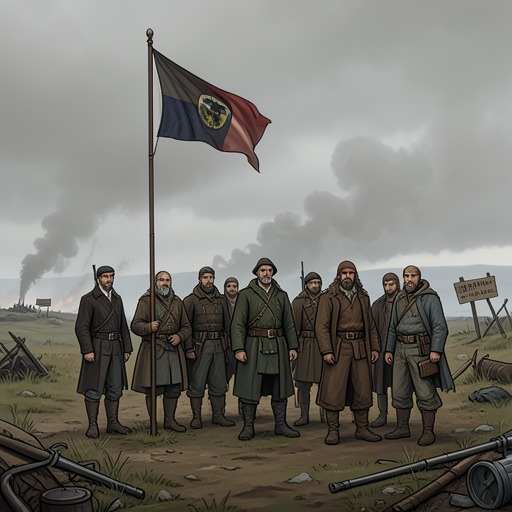
The mission succeeded in destroying both the creatures and their eggs. Its human cost was severe: ten of the fourteen troopers Josh had brought to the island were killed in the battle. The outcome thus joined a decisive local victory to a substantial loss of life; the town’s later relief did not erase what the operation had demanded of those sent to carry it out.
The work extended beyond killing the animals. Their carcasses were properly disposed of, and the EPA cleaned up the toxic element that had leaked from the submarine, restoring the island’s ecosystem. Those measures addressed two connected risks: surviving eggs could renew the infestation, while contaminated remains or environmental waste could carry the danger onward. The destruction of the island population and the cleanup of its habitat made the operation more complete than a battlefield victory alone.
After returning, Mason was publicly identified as the sheriff responsible for finding and killing the creatures, while Josh and his troopers also received attention for their contribution. Mason was content to share the spotlight and cared little for fame. His public account emphasized that Josh’s assistance had helped prevent another Sligger problem in Sweetboro, because the creatures had been exterminated on the island they originated from before they could settle in town again.
Lessons for Finding and Destroying Nests
The later response drew on practical lessons Mason described after the island mission. He advised searchers to prioritize nests, which Sliggers favored in dark, wet places: shaded thickets, seaside caves, and other sites where water currents would not disturb them. Finding a nest meant destroying both it and the Sliggers associated with it. This guidance made locating breeding sites, rather than merely reacting to visible animals, central to an effective search.
Mason also warned against simply blowing the creatures apart. Scattering mutated tissue into water could allow other animals to eat it and, in turn, restart the cycle of contamination. Denise likewise stressed that responders should recover tissue and collect and burn carcasses cleanly so scavengers could not consume remains carrying mutated DNA. When Ron Mittenfeld briefed troops, he passed on Denise’s warning against explosives. The post-mission protocol therefore treated disposal as part of extermination, not an afterthought.
The source of the danger was still uncertain even as responders adopted these precautions. Mason described the strange experimental material found inside the submarine and the suspicion that it involved genetic mutation or biological warfare, while Denise continued to await laboratory results. The mission established a connection between the wreck, the leak, and the local creatures, but it did not resolve the chemistry or fully explain their evolution. That distinction shaped the subsequent effort: teams had to act on the observed risks while the origin remained under investigation.
Aftermath and Limits of Victory
In Sweetboro, the immediate result looked conclusive. The people were relieved and grateful, and Mason saw the town as safe again. Yet he remained mentally scarred by the island experience; his nightmares were becoming less frequent, not wholly absent. The operation’s aftermath therefore included both the community’s return to security and the lasting personal consequences of the battle for the sheriff who had led it.
The wider story soon qualified the meaning of the victory. Denise concluded that attacks reported far apart—including a campground in Georgia and Sligger eggs on a Florida beach—could not be explained by a single local nest. Multiple nests, eggs, and creatures must be present along the coast, she warned, leaving no reliable way to know where they were before an attack. Later, investigators traced Sliggers moving east along the Gulf of Mexico with coastal currents, with Port Arthur, Texas, the furthest-west location reported at that point. The Wrecker Island operation had eliminated the island population and restored its ecosystem; it had not eliminated every population elsewhere.
The contrast is central to the event’s significance. At Wrecker Island, coordinated force, nest destruction, and careful disposal could produce a clear local success. Across a connected coastline, however, dispersed nests and waterborne spread made that success difficult to reproduce at scale. The operation became both a model for later search and extermination procedures and a reminder that destroying an apparent point of origin did not guarantee that an invasive threat had stopped spreading.